
Phoenician Maritime Risk Pooling (c. 2000–1000 BCE)
Event Date: c. 2000–1000 BCE Category: Global Events & Geopolitics (sub‑category: Ancient Origins of Risk Sharing)
Summary
Phoenician maritime traders developed one of the earliest known systems of shared financial risk. Merchants pooled resources so that if a ship or cargo was lost at sea, the loss was distributed across the group rather than borne by a single trader. This practice represents the first documented form of organized risk pooling in human history.
Background / Context
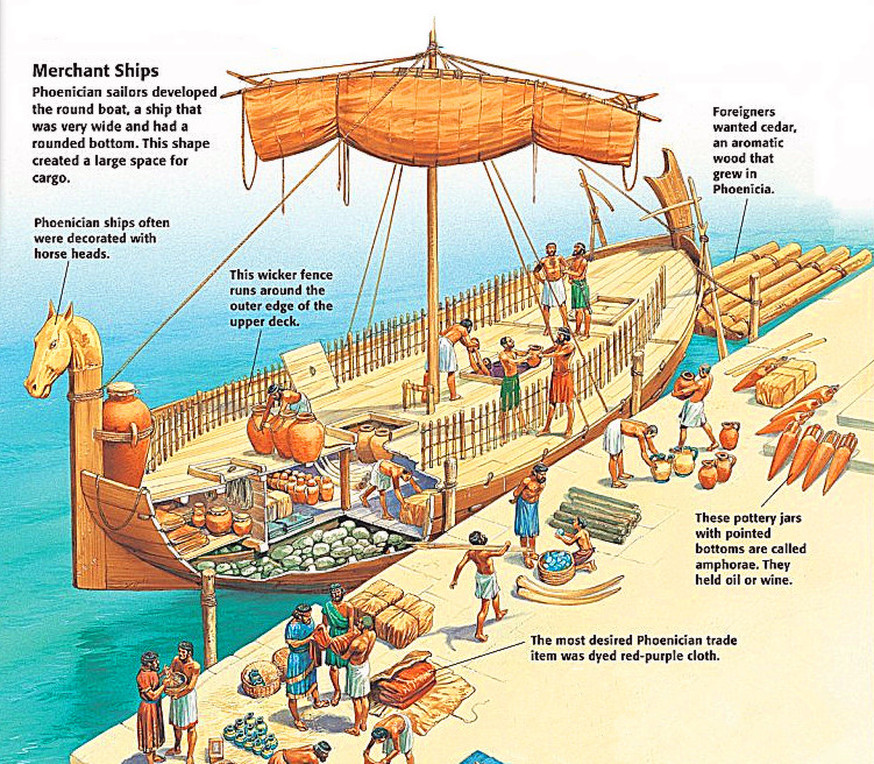
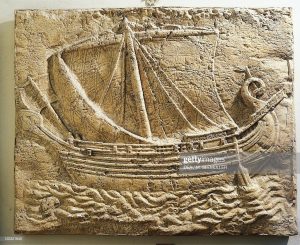
The Phoenicians were the dominant maritime traders of the ancient Mediterranean, operating extensive commercial networks from modern‑day Lebanon to North Africa, Spain, and beyond. Their economy depended on long‑distance sea voyages — which were extremely hazardous. Storms, piracy, shipwrecks, and navigational uncertainty made maritime trade a high‑risk enterprise.
Because a single shipwreck could financially ruin a merchant, the Phoenicians developed cooperative financial arrangements to spread the risk of loss across multiple traders.
What Happened
Historical and archaeological evidence suggests that Phoenician merchants:
- pooled cargo value across multiple traders
- shared liability for losses at sea
- distributed the financial impact when a vessel was lost
- formalized agreements within merchant guilds or trading partnerships
These arrangements were not “insurance policies” in the modern sense, but they were structured, intentional, and widely practiced. They represent the earliest known attempt to manage uncertainty through collective financial responsibility.
Claims Impact
Not applicable in the modern sense, but the Phoenician system functioned as a proto‑claims mechanism:
- A ship lost at sea triggered a shared financial response.
- Merchants absorbed proportional losses based on their stake in the pooled venture.
- No single trader faced catastrophic ruin from a maritime disaster.
This is the earliest known example of loss distribution — the core function of insurance.
Regulatory / Legal Impact
There was no centralized regulatory authority, but Phoenician city‑states (Tyre, Sidon, Byblos, Carthage) enforced commercial norms through:
- merchant guilds
- temple‑based recordkeeping
- customary maritime law
These proto‑legal frameworks influenced later Greek and Roman maritime law.
Market Impact
Phoenician risk pooling enabled:
- larger and more frequent voyages
- expansion of long‑distance trade routes
- increased capital investment in ships and cargo
- the rise of Carthage as a commercial superpower
By reducing the financial volatility of maritime trade, the system increased economic stability and encouraged commercial growth.
Why It Mattered
This is the origin point of insurance thinking.
Phoenician maritime pooling introduced the foundational idea that:
Risk can be shared, and loss can be distributed.
This concept directly influenced:
- Greek General Average
- Roman Bottomry and Respondentia
- medieval guild risk‑sharing
- early marine insurance in Italian city‑states
- the eventual rise of Lloyd’s of London
Every modern insurance product — from homeowners to cyber — traces its intellectual lineage back to this moment.
Related Entries
- c. 800–600 BCE — Greek General Average — the first codified loss‑sharing doctrine, directly influenced by earlier Mediterranean pooling traditions
- c. 600–300 BCE — Indian Bottomry‑Style Maritime Contracts — South Asian maritime risk‑transfer mechanisms that evolved independently but reflect similar principles of shared peril
- c. 1000–300 BCE — Chinese Clan & Merchant Mutual‑Aid Systems — East Asian cooperative structures that parallel Phoenician collective‑risk practices
- c. 300 BCE — Roman Bottomry Loans — ship‑secured maritime loans that formalized risk transfer in the Greco‑Roman world
- c. 100 CE — Roman Respondentia — cargo‑secured maritime loans that preserved and expanded earlier Mediterranean risk‑sharing logic
- c. 1150–1250 — Laws of Oleron — medieval sea code that transmitted ancient Mediterranean loss‑sharing principles into Western Europe
- c. 1200–1500 — Hanseatic Sea Laws — Northern European maritime rules that reaffirmed proportional loss‑sharing and collective responsibility
- 1300–1400 — First Italian Marine Insurance Policies — the first true insurance contracts, built on centuries of Mediterranean loss‑sharing tradition
- 1688 — Lloyd’s Coffee House — the underwriting marketplace that operationalized ancient risk‑pooling principles into modern insurance practice
- 1906 — Marine Insurance Act (UK) — the codification of marine‑insurance law that preserved General Average and loss‑sharing as core doctrines
- Rhodian Sea Law (c. 800–200 BCE) (forthcoming) — the ancient maritime code traditionally associated with formalizing Mediterranean loss‑sharing principles
Sources / Notes
- Archaeological studies of Phoenician trade networks
- Ancient Mediterranean maritime law scholarship
- Comparative analyses of early risk‑sharing systems
