
Roman Bottomry Loans (c. 300 BCE)
Event Date: c. 300 BCE Category: Global Events & Geopolitics (Ancient Origins of Risk Sharing)
Summary
The Romans formalized bottomry loans, a contractual system in which a lender financed a maritime voyage and assumed the risk of loss. If the ship was lost at sea, the loan was cancelled; if the voyage succeeded, the lender received a high interest rate. This is one of the clearest ancient predecessors of modern marine insurance and represents a major step toward contractual risk transfer.
Background / Context
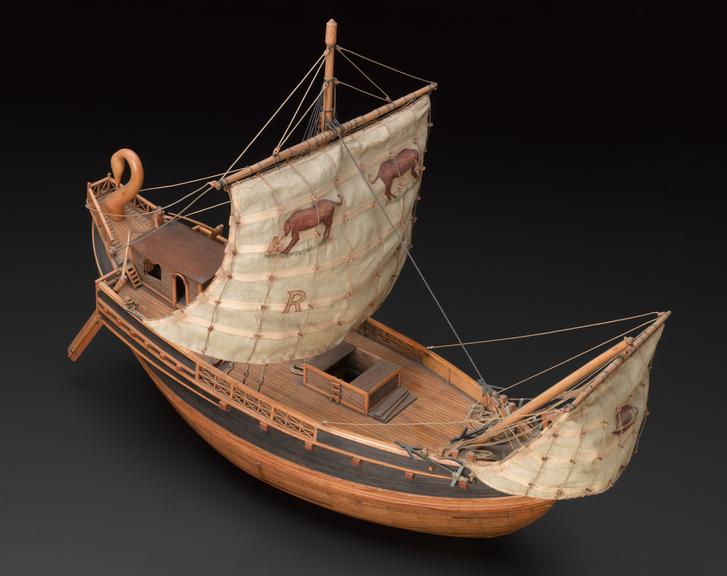
By the 4th–3rd centuries BCE, Rome was expanding into a Mediterranean superpower. Maritime trade was essential for:
- grain imports
- military logistics
- commercial expansion
- interregional trade
Roman merchants and shipowners faced significant risks:
- storms
- piracy
- navigational hazards
- wartime losses
To finance voyages and manage risk, Romans adopted and expanded on earlier Greek and Phoenician practices, creating a formalized, legally recognized maritime loan system.
What Happened
1. The Bottomry Contract (Foenus Nauticum)
A lender provided capital for a voyage. Repayment depended entirely on the ship’s safe arrival.
If the ship returned safely:
- the borrower repaid the principal
- plus a high interest rate (the “premium”)
If the ship was lost:
- the loan was forgiven
- the lender absorbed the loss
This is pure risk transfer, centuries before formal insurance policies.
2. Risk‑Adjusted Premiums
Interest rates varied based on:
- season (higher during storm seasons)
- route danger
- ship condition
- wartime risk
This is early risk‑based pricing.
3. Legal Recognition
Roman law explicitly recognized bottomry contracts, including:
- enforceability in court
- rules for fraud
- liability standards for shipmasters
- documentation requirements
This is one of the earliest examples of state‑recognized insurance‑like contracts.
Claims Impact
Bottomry created a predictable, contract‑based claims process:
- If a peril occurred, the borrower owed nothing
- The lender bore the financial loss
- Disputes were resolved through Roman courts
- Documentation (ship logs, witness testimony) mattered
This is the ancestor of:
- marine claims adjustment
- hull and cargo insurance
- salvage and jettison rules
Regulatory / Legal Impact
Roman law shaped bottomry through:
- the Digest and Institutes
- commercial court precedents
- maritime liability rules
- anti‑usury exceptions (bottomry was exempt from interest caps due to risk)
This legal infrastructure influenced:
- Byzantine maritime law
- medieval Italian sea codes
- early European marine insurance
- the Marine Insurance Act of 1906
Market Impact
Bottomry enabled:
- larger, more ambitious voyages
- increased capital flow into maritime trade
- reduced merchant exposure to catastrophic loss
- expansion of Roman commercial networks
- financing of grain fleets and military supply chains
It made maritime commerce more predictable and investable.
Why It Mattered
Roman Bottomry is one of the clearest ancient ancestors of modern insurance.
It introduced:
- contractual risk transfer
- premium‑like interest structures
- risk‑based pricing
- legal enforceability
- lender‑borne peril risk
It is the bridge between ancient risk pooling and the formal marine insurance markets of medieval Italy and early modern Europe.
SIDEBAR: Why Bottomry Is Not Speculative Risk
Modern insurance theory draws a bright line between pure risk (only the possibility of loss) and speculative risk (possibility of loss or gain). Pure risks are insurable; speculative risks are not.
At first glance, bottomry looks like a speculative arrangement: a lender charges a very high return if the voyage succeeds and loses everything if the ship sinks. But bottomry is actually a pure‑risk transfer mechanism, not a speculative one.
1. The trigger is a pure risk, not a business outcome
A bottomry loan is cancelled only if a maritime peril occurs:
- storm
- shipwreck
- piracy
- navigational hazard
These are accidental, external, fortuitous events — the exact definition of pure risk. The lender does not share in the merchant’s trading profits. The only “gain” is the fixed, pre‑agreed interest rate.
2. The lender is pricing peril, not speculating on trade
The high interest rate is simply a risk‑loading for a very high probability of loss. This is no different from an insurer charging a very high premium to insure a 100‑year‑old man. The risk is almost certain, but still pure.
3. No party can profit from the loss
Speculative risk allows gain from the outcome. Bottomry does not:
- The borrower gains nothing from the ship sinking.
- The lender gains nothing from the ship sinking.
- The peril only creates loss.
That is pure risk.
4. The structure mirrors modern insurance
Bottomry is essentially:
- a marine insurance policy
- disguised as a loan contract
- priced like high‑risk underwriting
- triggered by perils of the sea
The lender is the insurer. The interest is the premium. The loss forgiveness is the claim.
Bottom line
Bottomry is not speculative risk. It is pure risk transfer, centuries before formal insurance existed.
Related Entries
- c. 800–600 BCE — Greek General Average — the ancient loss‑sharing doctrine that shaped Roman rules for jettison, contribution, and peril‑based loss
- c. 600–300 BCE — Indian Bottomry‑Style Maritime Contracts — parallel South Asian maritime‑finance structures that reflect similar risk‑transfer logic
- c. 1000–300 BCE — Chinese Clan & Merchant Mutual‑Aid Systems — early cooperative risk‑sharing traditions that paralleled Roman maritime finance
- c. 100 CE — Roman Respondentia — the cargo‑secured counterpart to bottomry, completing Rome’s two‑part maritime risk‑transfer system
- c. 1150–1250 — Laws of Oleron — medieval sea codes that preserved Roman concepts of liability, seaworthiness, and peril‑based loss
- c. 1200–1500 — Hanseatic Sea Laws — Northern European maritime rules that blended Roman principles with emerging commercial practice
- 1300–1400 — First Italian Marine Insurance Policies — the first true insurance contracts, directly influenced by Roman maritime finance
- 1400s–1500s — Spread of Marine Insurance to Northern Europe — the diffusion of Italian and Roman‑derived concepts into the Low Countries and England
- 1688 — Lloyd’s Coffee House — the underwriting marketplace that emerged from centuries of maritime law shaped by bottomry and respondentia
- Roman Maritime Law & the Digest (1st–3rd Centuries CE) (forthcoming) — the legal texts that defined bottomry, respondentia, and maritime peril standards
Sources / Notes
- Roman legal texts (Digest, Institutes)
- Scholarship on Roman maritime commerce
- Comparative studies of ancient bottomry systems
