
The First Italian Marine Insurance Policies (c. 1300–1400 CE)
Event Date: c. 1300–1400 CE Category: Global Events & Geopolitics (Birth of Formal Insurance)
Summary
In the 14th century, merchants in Italian city‑states such as Genoa, Florence, and Venice began using written marine insurance contracts that included premiums, underwriters, indemnity clauses, exclusions, and defined perils. These are the earliest documents that match the structure of modern insurance policies. This moment marks the true birth of the insurance industry.
Background / Context
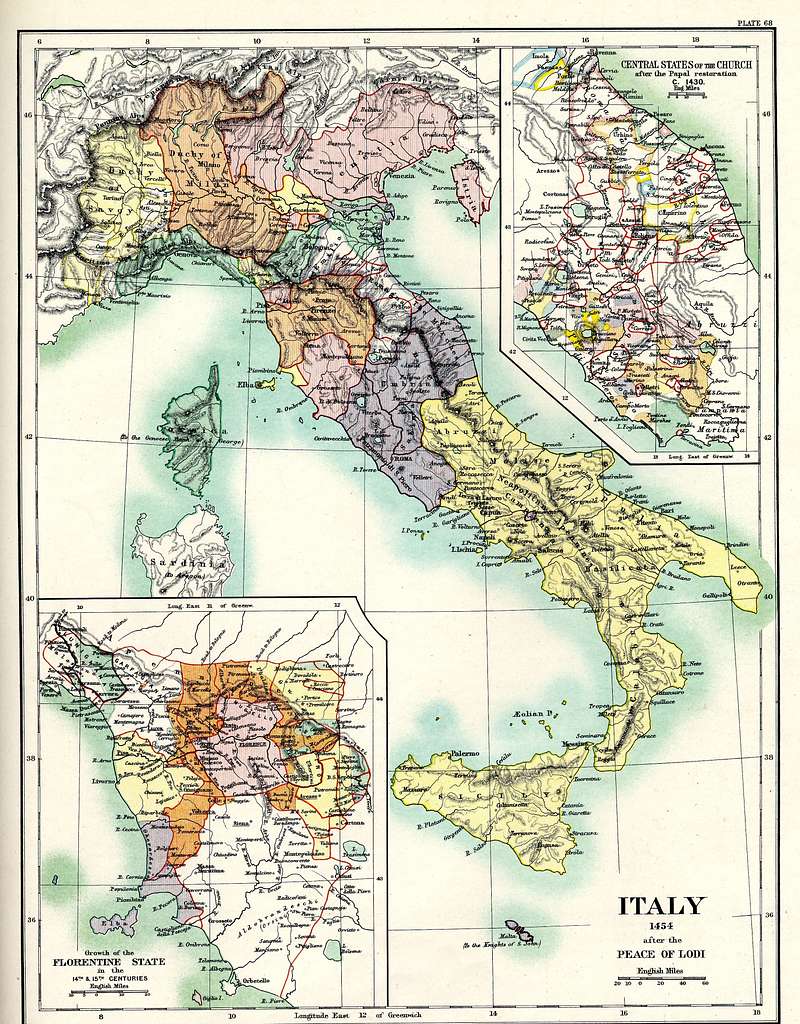
By the early 1300s, Italian maritime republics dominated Mediterranean trade. Their merchants financed:
- spice routes
- textile exports
- banking networks
- long‑distance voyages to the Levant and North Africa
Trade was profitable but dangerous. Merchants needed a way to:
- transfer maritime risk
- secure financing
- protect cargo investments
- reduce catastrophic losses
Italian bankers and merchants synthesized:
- Roman bottomry
- Greek General Average
- medieval sea codes (Oleron, Hanseatic laws)
- emerging commercial accounting practices
The result was the first true insurance contract.
What Happened
1. The First Written Policies
The earliest surviving marine insurance policy is from Genoa, 1347. It contains:
- a premium
- a defined voyage
- named underwriters
- specified perils
- exclusions
- indemnity obligations
- a claims process
This is unmistakably modern insurance.
2. Underwriters and Risk Pricing
Italian merchants introduced:
- multiple underwriters sharing a single risk
- premiums based on voyage danger
- diversification across multiple voyages
- early actuarial thinking
This is the birth of the underwriting profession.
3. Indemnity and Exclusions
Policies included:
- indemnity for loss or damage
- exclusions for fraud, misconduct, or deviation
- warranties (e.g., seaworthiness)
- defined perils of the sea
These concepts survive unchanged in modern marine insurance.
4. Transferability and Negotiability
Policies could be:
- bought
- sold
- assigned
- used as collateral
This made insurance a financial instrument.
TIMELINE INSERT: The Oldest Insurance Contract in the World (Genoa, 1347)
The 1347 Genoa Marine Insurance Policy
The earliest surviving insurance contract in the world is a marine insurance policy dated 1347, preserved in the Archivio di Stato di Genova. It contains all the essential elements of modern insurance:
- premium
- voyage
- underwriters
- perils
- exclusions
- indemnity
- claims process
This is the documentary birth of the insurance industry.
Where Other Early Policies Survive
Although Genoa holds the oldest known policy, similar 14th‑century insurance artifacts survive in:
Archivio di Stato di Firenze (Florence)
- underwriting partnerships
- premium schedules
- cargo‑specific policies
Archivio di Stato di Venezia (Venice)
- maritime contracts with insurance clauses
- bottomry‑respondentia hybrids
- underwriting records for Levant voyages
Biblioteca Nazionale Marciana (Venice)
- merchant manuals
- early commercial law texts
- notarial policy forms
Biblioteca Ambrosiana (Milan)
- merchant account books
- underwriting ledgers
- correspondence referencing premiums and losses
University Special Collections
Microfilm or facsimile copies appear at:
- University of Genoa
- University of Florence
- University of Bologna
- Harvard’s Baker Library
- The Warburg Institute (London)
Together, these archives document the transition from risk‑sharing → contract‑based insurance.
Claims Impact
Italian policies created the first formal claims process:
- loss had to be documented
- witnesses or ship logs were required
- adjusters evaluated the claim
- indemnity was paid according to contract terms
This is the direct ancestor of modern claims adjustment.
Regulatory / Legal Impact
Italian city‑states developed:
- insurance courts
- merchant tribunals
- standardized policy forms
- rules for fraud and misrepresentation
- early solvency expectations for underwriters
These legal structures spread to:
- Spain
- Portugal
- France
- the Low Countries
- England
They form the legal DNA of modern insurance regulation.
Market Impact
The introduction of formal insurance contracts enabled:
- larger, riskier voyages
- expansion of Mediterranean and Atlantic trade
- increased capital flow
- reduced merchant exposure to catastrophic loss
- the rise of merchant‑banker families (Medici, Bardi, Peruzzi)
Insurance became a core financial tool of European commerce.
Why It Mattered
This event marks the birth of the insurance industry.
Italian marine insurance introduced:
- premiums
- underwriters
- indemnity
- exclusions
- warranties
- claims adjustment
- risk pricing
- diversification
- contract law
Every modern insurance product — P&C, life, health, cyber — descends from these 14th‑century Italian policies.
Related Entries
-
- c. 800–600 BCE — Greek General Average — ancient loss‑sharing doctrine that influenced medieval Italian maritime law
- c. 600–300 BCE — Indian Bottomry‑Style Maritime Contracts — parallel maritime‑finance structures that prefigured Italian risk‑transfer mechanisms
- c. 300 BCE — Roman Bottomry Loans — ship‑secured maritime loans that formed the legal and financial foundation for Italian insurance
- c. 100 CE — Roman Respondentia — cargo‑secured maritime loans whose structure directly informed Italian policy design
-
- c. 1150–1250 — Laws of Oleron — medieval sea codes that shaped the legal environment for early Italian underwriting
- c. 1200–1500 — Hanseatic Sea Laws — Northern European maritime rules that blended with Italian practices as insurance spread north
-
- 1400s–1500s — Spread of Marine Insurance to Northern Europe — the transmission of Italian underwriting methods to Bruges, Antwerp, Amsterdam, and London
- 1688 — Lloyd’s Coffee House — the underwriting marketplace that emerged from the Italian‑to‑Northern‑European diffusion of insurance
-
- 1906 — Marine Insurance Act (UK) — the codification of marine‑insurance law that preserved Italian concepts of indemnity, perils, and warranties
- 1347 — The Oldest Surviving Marine Insurance Policy (Genoa) (forthcoming) — the earliest known insurance contract containing premiums, perils, exclusions, and indemnity clauses
- Italian Merchant‑Banker Underwriting Networks (13th–14th Centuries) (forthcoming) — the Genoese, Florentine, and Venetian trading houses that institutionalized early underwriting
Sources / Notes
- Genoa State Archives (1347 policy)
- Florentine and Venetian commercial records
- Comparative studies of medieval insurance contracts
