
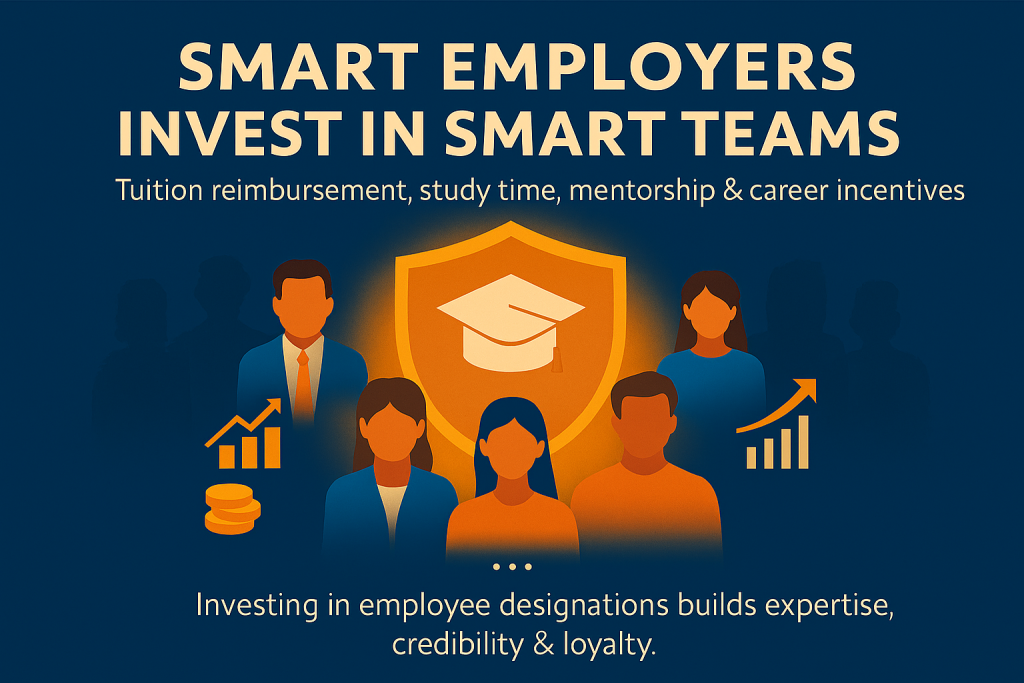
 🧾 Earning an insurance designation like CPCU, CLU, CEBS, or AIC can be a game-changer for career growth. But the cost of courses, exams, and study materials can add up. Fortunately, many insurance companies offer financial support—through tuition reimbursement, sponsorships, or performance incentives.
The key is knowing how to approach your employer strategically. Here’s a step-by-step guide to help you present a compelling case for employer-sponsored education. 🎓
🕵️♂️ 1. Research Your Company’s Education Policies
Before initiating the conversation, investigate whether your employer has an existing education reimbursement program. Some companies formally cover costs for designations, while others offer partial or case-by-case support.
📌 Where to Look:
- Employee handbook or internal HR portal
- HR department or professional development coordinator
- Colleagues or mentors who’ve earned designations
Even if no formal policy exists, many companies are open to funding when the request is framed as a business benefit.
💼 2. Frame the Request as a Business Investment
Employers are more likely to approve funding if they see a clear return on investment (ROI). Position your request as a way to strengthen your role and contribute to company goals.
✅ Key Talking Points:
- Relevance of the designation to your current responsibilities
- Skills gained in areas like underwriting, claims, compliance, or risk management
- Competitive advantages for the company in staying aligned with industry standards
Example pitch:
“By earning the CPCU designation, I’ll gain expertise in underwriting, risk assessment, and claims handling—making me more effective in evaluating policies and reducing company exposure.”
🔄 3. Offer Flexible Study & Cost Options
If budget or time is a concern, offer solutions that reduce risk for your employer.
📌 Flexibility Strategies:
- Propose reimbursement after passing each exam
- Commit to studying outside work hours
- Break down costs and suggest partial or phased funding
This shows initiative and makes your request more feasible.
🏢 4. Emphasize Industry Standards & Competitor Practices
If your company doesn’t have a formal program, highlight how competitor firms invest in employee certifications to stay competitive.
Example argument:
“XYZ Insurance sponsors CPCU certifications because they improve underwriting accuracy and regulatory compliance. Supporting professional development helps retain top talent and strengthens our market position.”
Benchmarking against industry peers adds credibility to your request.
📧 5. Make the Ask & Follow Up Professionally
Once your case is built, schedule a formal meeting or send a structured email to your manager or HR team.
✅ Include:
- Why you want the designation
- How it benefits the company
- Specific funding details (cost breakdown, study timeline, reimbursement model)
If approval isn’t immediate, follow up respectfully and offer alternatives like cost-sharing or phased reimbursement.
🚀 Conclusion: Investing in Your Future
Approaching your employer with confidence and a strategic plan increases your chances of securing financial support for a valuable insurance designation. By framing it as a business investment, offering flexible options, and aligning with industry standards, you position yourself—and your company—for long-term success.
🔗 Ready to find the right designation for your career goals? Explore IDL’s Designation Hubs and Career Pathways to compare costs, benefits, and impact before making your request.
